
What I Prep Before Every D&D Session (A 90-Minute Checklist)
The exact 90-minute session prep checklist I use for every D&D game — from encounter maps to NPC notes — with time limits per step and what I skip.
I used to prep for 4 hours per session. Full stat blocks hand-copied. Contingency plans for 6 possible player decisions. Three maps for encounters that might not happen.
Now I prep for 90 minutes. Sometimes 60. The sessions are better because I'm less attached to outcomes and more responsive to what my players actually do.
Here's the checklist, with exact time limits. I've used this framework for 80+ sessions across the Shattered Coast campaign and 2 one-shots. It works for planned encounters and for improv-heavy sandboxes.
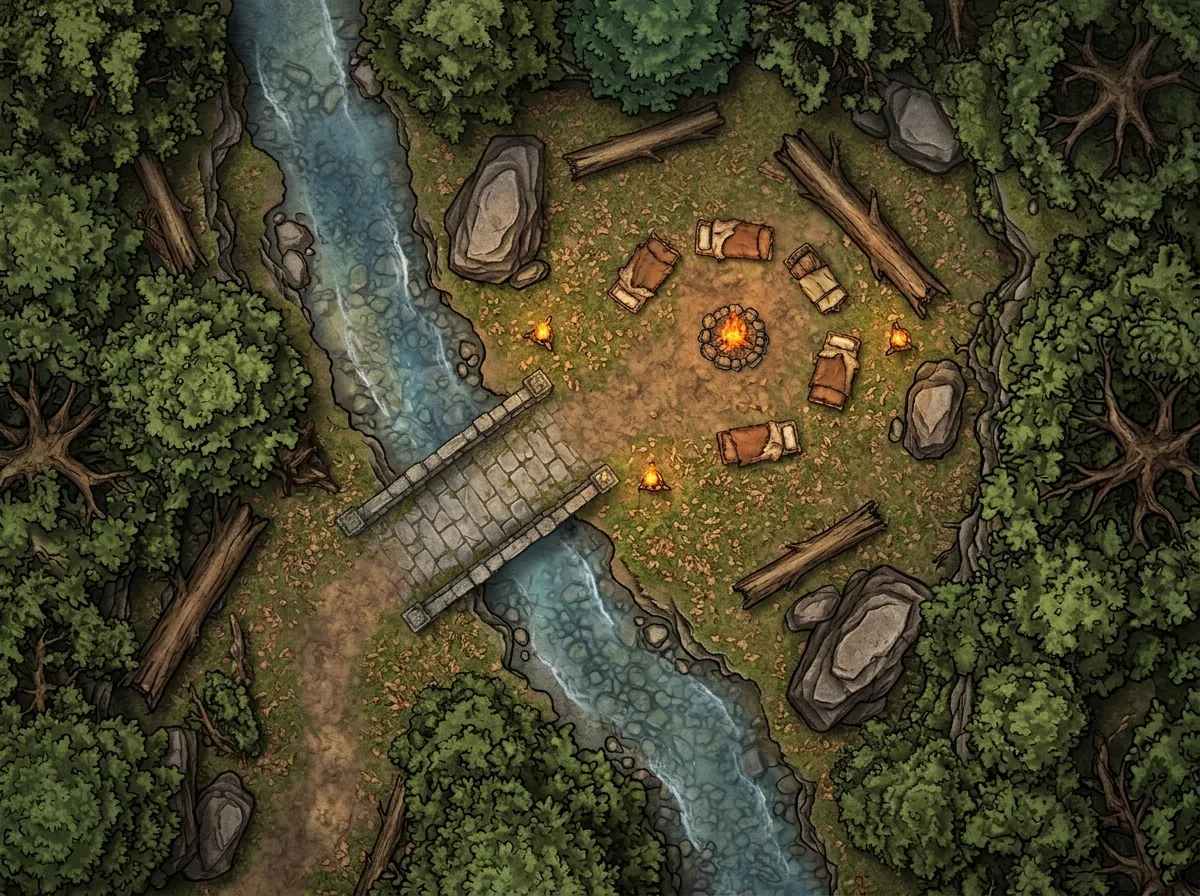
The 90-Minute Framework
| Step | Time | Purpose |
|---|---|---|
| 1. Review last session | 10 min | Remember where you are |
| 2. Define the session goal | 5 min | Know what "done" looks like |
| 3. Prep 2-3 encounters | 30 min | The mechanical core |
| 4. Generate maps | 10 min | Visual anchors |
| 5. NPC prep | 15 min | Voices and motivations |
| 6. Secrets and clues | 10 min | Information delivery |
| 7. Opening line | 5 min | Session cold open |
| 8. Buffer | 5 min | Catch anything missed |
| Total | 90 min |
Step 1: Review Last Session (10 min)
Open your session notes from last time. If you don't have session notes, start taking them — even bullet points during play. I use a Google Doc with one heading per session.
Read the last session's notes and answer:
- Where did we leave off? (Physical location + narrative moment)
- What did each PC do that mattered?
- What loose threads exist?
I always check the thread list. My campaign currently has 4 active threads: the Ashenvale succession, the smuggling ring in Driftholm, the missing cleric from Kethranor, and the unexplained plague references. I don't prep all 4 — I prep whichever 1-2 threads the players are actively pulling.
Step 2: Define the Session Goal (5 min)
One sentence. What is this session about?
"The party crosses the disputed river border and encounters the checkpoint garrison."
"The party investigates the missing merchants in Saltmere's docks district."
"Boss fight with the corrupted treant in the Ashenvale ruins."
This isn't a railroad — it's a direction. If the players go elsewhere, I adapt. But starting with a goal gives me a prep focus. Without one, I prep everything and use nothing.
Sly Flourish's "strong start" concept aligns with this — the goal should connect to a scene that makes players lean forward in their chairs.
Step 3: Prep 2-3 Encounters (30 min)
Not all encounters are combat. My average session has:
- 1 combat encounter
- 1 social encounter (negotiation, investigation, NPC interaction)
- 1 exploration/puzzle encounter
For combat: pick the monsters, note their AC/HP/key abilities. I don't copy full stat blocks — I write "Hobgoblin Captain: AC 17, HP 39, multiattack (2×longsword +4, 1d8+2)" on a notecard. That's enough for 90% of monsters. For complex creatures, I bookmark the page in the Monster Manual or D&D Beyond.
For social encounters: name the NPC, write one sentence about what they want, one sentence about what they know that the players need. Done.
For exploration: write the challenge (locked door, flooded passage, trapped corridor) and the DC. I wrote more about effective dungeon traps in a separate post.
Step 4: Generate Maps (10 min)
This step used to take 90 minutes by itself when I was using Inkarnate. Now it takes 10.
For each combat encounter, I generate one map with the D&D map generator. My prompt includes: location type, key terrain features, lighting, and style.
Example from my last session: "Top-down border checkpoint battle map. A stone bridge over a wide river with a military garrison building on one side. Wooden barricades across the road. Guard towers. Overcast sky, muddy ground. Fantasy battlemaps style."
Generation: 45 seconds. Quality check: does the map have the features I described? If yes, save it. If not, regenerate with a refined prompt. Rarely takes more than 2 attempts.
For VTT games, I import directly — see my VTT settings guide. For in-person games, I print it — see my printing guide.
Step 5: NPC Prep (15 min)
For each NPC the players will interact with this session, I write:
Name: Sergeant Varek
Voice note: gruff, short sentences, slight accent
Want: keep his checkpoint funded; fears being reassigned
Secret: taking bribes from the smugglers the party is investigating
Appearance: burn scar on left hand, always cleaning his sword
Four lines per NPC. Maximum 3 NPCs per session. That's 12 lines of prep that makes social encounters feel real.
I do NOT write dialogue. Scripted dialogue sounds scripted. The voice note + want + secret gives me enough to improvise naturally.
The Monsters Know What They Do has a great framework for NPC tactics that I apply to intelligent enemies. For social NPCs, the "want + secret" formula handles everything.
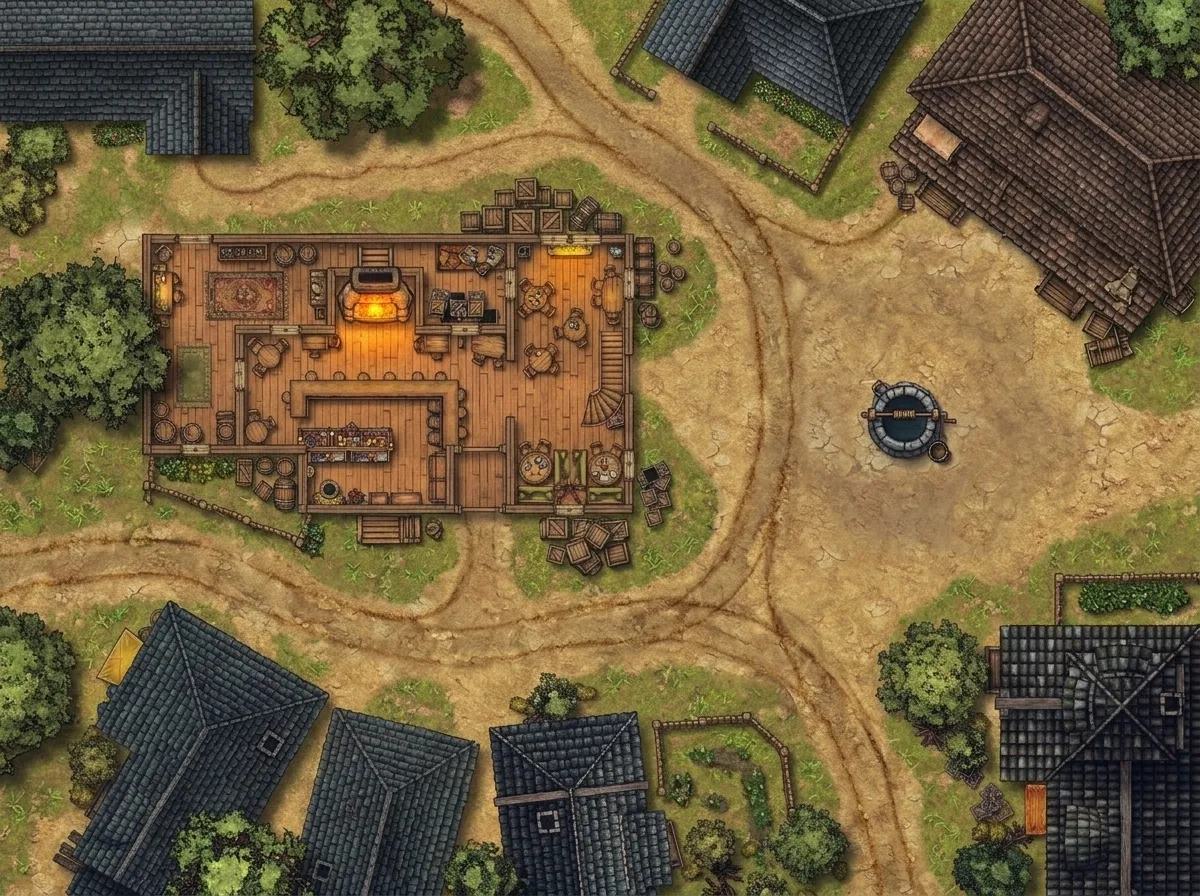 A tavern map I keep on standby — half my NPC interactions happen in taverns, and having a map ready prevents "theater of the mind by default."
Step 6: Secrets and Clues (10 min)
This is the Mike Shea technique that changed my prep more than anything else. From Return of the Lazy Dungeon Master: write 10 secrets or clues that exist in the world. Not tied to specific locations or NPCs. They float. When a player investigates, asks the right question, or searches the right room, I attach the most relevant secret.
Example list for my next session:
- The smugglers are shipping obsidian-laced weapons, not trade goods
- Sergeant Varek's daughter was kidnapped by the smuggling ring
- The plague 15 years ago was arcane, not natural
- A dwarven mining cartel on the Shard Isles is funding the smugglers
- The disputed river has been slowly changing course — someone is using magic
I rarely use all 10 in one session. The unused ones carry forward. Some have been on my list for 6 sessions, waiting for the right moment.
Step 7: Opening Line (5 min)
Write the first thing you'll say when the session starts. Not a recap — an opening scene.
"The morning fog hasn't lifted from the river when you hear the checkpoint bell. Three rings. That means trouble."
A strong opening line sets the tone, re-engages distracted players, and gives you momentum. I write one for every session. Sometimes I use it, sometimes the players' first actions take us somewhere else. But having it prevents the dreaded "so, uh, where were we?" start.
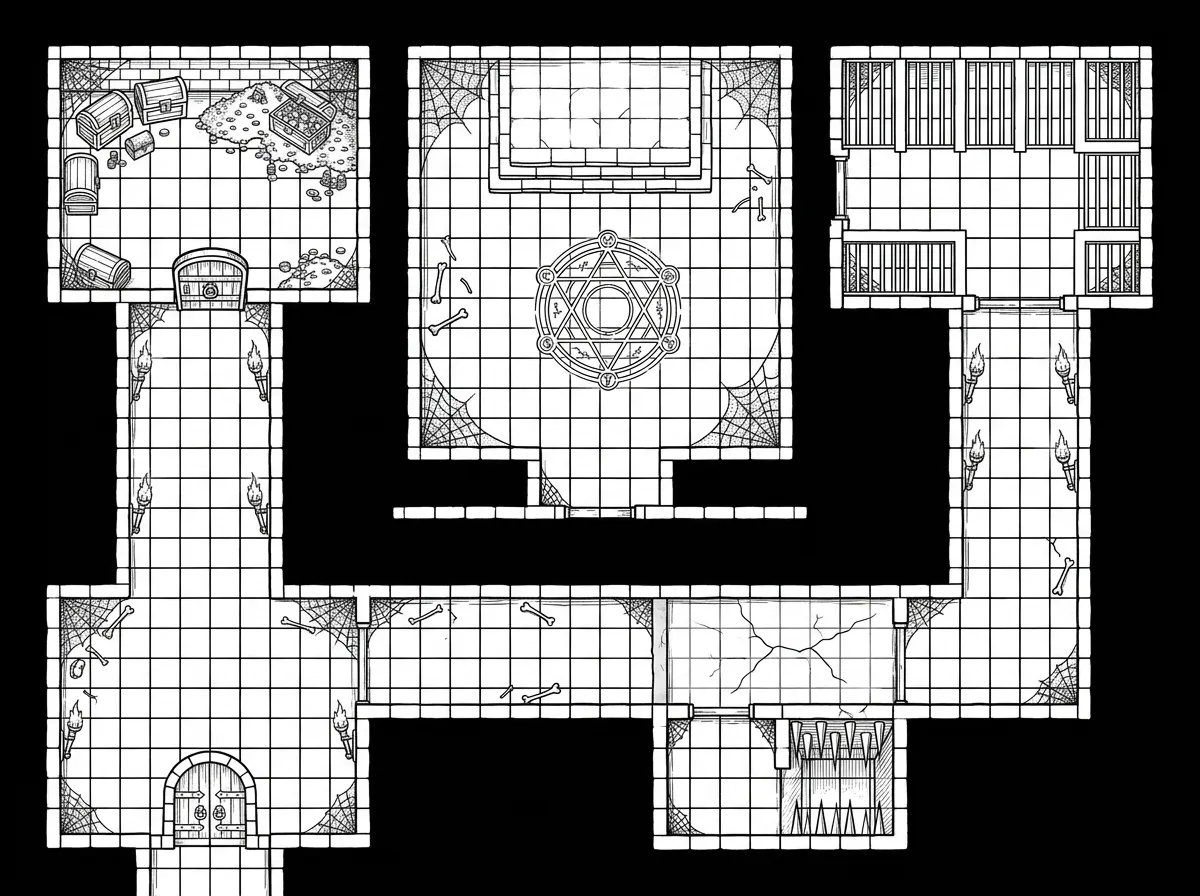 The dungeon map I generated for the Kethranor smuggling investigation — 45 seconds of generation, 3 sessions of use.
What I Deliberately Skip
- Full stat blocks for every creature: I reference the book or D&D Beyond for complex monsters. Copying stat blocks is wasted time.
- Contingency plans for unlikely decisions: if the players do something I didn't prep for, I improvise. Prep for the probable, not the possible.
- Background lore for places players won't visit: I built my world in 3 hours specifically to avoid over-prepping lore.
- Detailed treasure tables: I have a running list of level-appropriate items and pull from it. No session-specific loot prep.
- Music playlists: some DMs swear by them. I've tried. The time spent curating music is better spent on NPC prep.
90 minutes. Two encounters, one map, three NPCs, and an opening line.
That's a session. Everything else is improvisation, player agency, and dice. Which is the whole point.
Related Reading
- How to Prep a D&D Dungeon in 20 Minutes — The dungeon-specific subset of this checklist.
- I Built a Fantasy World in 3 Hours — The worldbuilding equivalent of "just enough" prep.
- DnD Map Generator Workflow — Step 4 in detail.
- Dungeon Traps That Actually Work — Encounter prep for trap-heavy sessions.
- DnD Tavern Maps: Why Every Bar Fight Needs More Than Tables — The tavern map you can prep in 5 minutes and reuse every session.
- D&D Map Generator — The tool behind Step 4.
- How to Run a Tavern Encounter That Isn't Just 'Roll Initiative' — The tavern encounter prep I add to every session checklist.

Written by
Toby
Indie Developer & Creator of FantasyGen
Toby is an independent developer focused on building AI-powered creative tools. He created FantasyGen to help game masters and worldbuilders generate fantasy maps instantly — no artistic skills required.
Continue the Campaign
How to Map a Cave System Without Getting Lost in Your Own Design
My 5-step workflow for designing cave map systems that stay playable. Start with entrance type, limit branches, add landmarks, loop dead ends — no spaghetti.
Desert Encounters That Aren't Just Heat and Thirst
Desert encounter prep that goes beyond survival mechanics. Caravan politics, sandstorm puzzles, buried ruins, and creature lairs for your desert biome map.
Island Map Design: Coastlines, Secrets, and Why Shape Matters
A 5-step island generator workflow: shape the silhouette, carve coastline features, place harbors, and hide secrets. Design your island map from the outside in.